Run SQL extensions on Kubernetes
- Latest Dynatrace
- How-to guide
- 5-min read
Create a configuration for your SQL based extension executing on Kubernetes.
Supported extensions
The following database types are supported, both as official Dynatrace Hub extensions and as custom extensions:
- Oracle
- Microsoft SQL Server
- PostgreSQL
- MySQL / MariaDB
- SAP HANA
- IBM Db2
- Generic JDBC
Prerequisites
-
A DynaKube with SQL extensions enabled (
.spec.extensions.databases) and all pods in a healthy state. For setup instructions, see Enable Dynatrace SQL database extensions. -
Dynatrace version 1.346+.
-
SQL Extension Executor 1.345+.
-
Extension Execution Controller 1.345+.
-
If you deploy a custom extension signed with your own certificate, configure the signing certificate in DynaKube before deploying the extension.
See Custom extension signing certificates andcustomExtensionCertificatesin the DynaKube parameters reference.
Create monitoring configuration
Via web UI
Latest Dynatrace
-
Open
 Extensions and select the extension you want to run.
 -
Select Add configuration.
-
Select Kubernetes.
-
Set Executor ID to the executor group ID defined in your DynaKube manifest (see
.spec.extensions.databases). -
Choose how to target Kubernetes clusters:
Target a single cluster—enable the Use single cluster toggle. A searchable list of available Kubernetes clusters appears. Select the cluster you want to target.
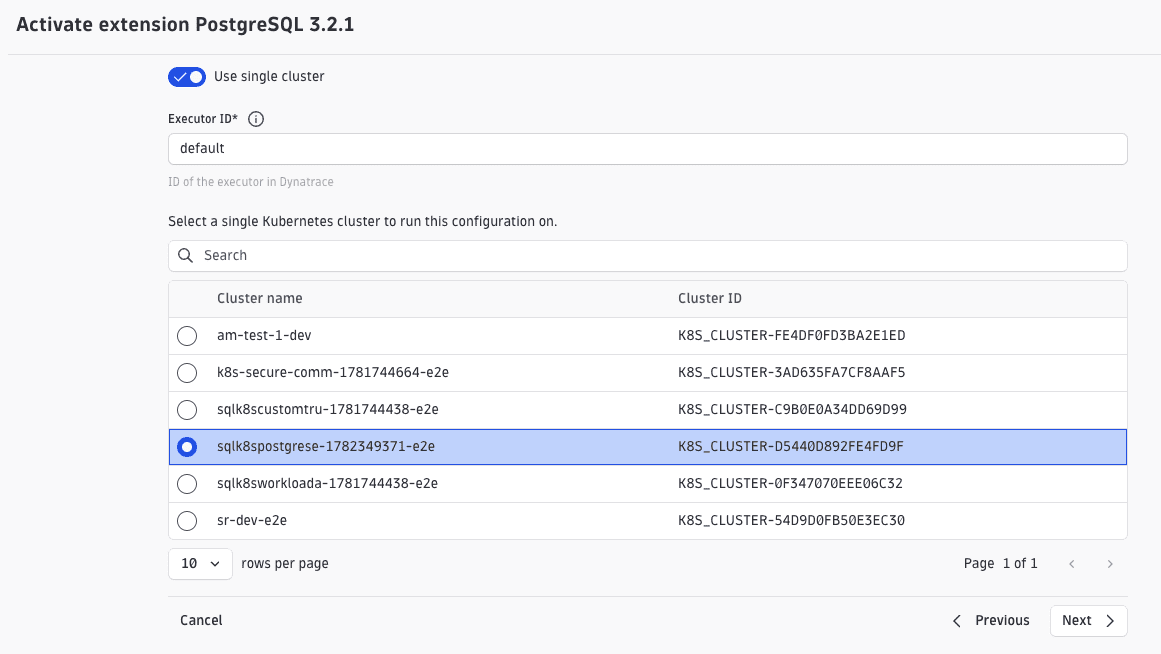 Single cluster selection list with Use single cluster toggle enabled
Target clusters by pattern—leave the Use single cluster toggle disabled. Select Add cluster name pattern and enter a pattern (for example,
*production*). The extension runs on all clusters whose name matches the pattern, including clusters connected in the future.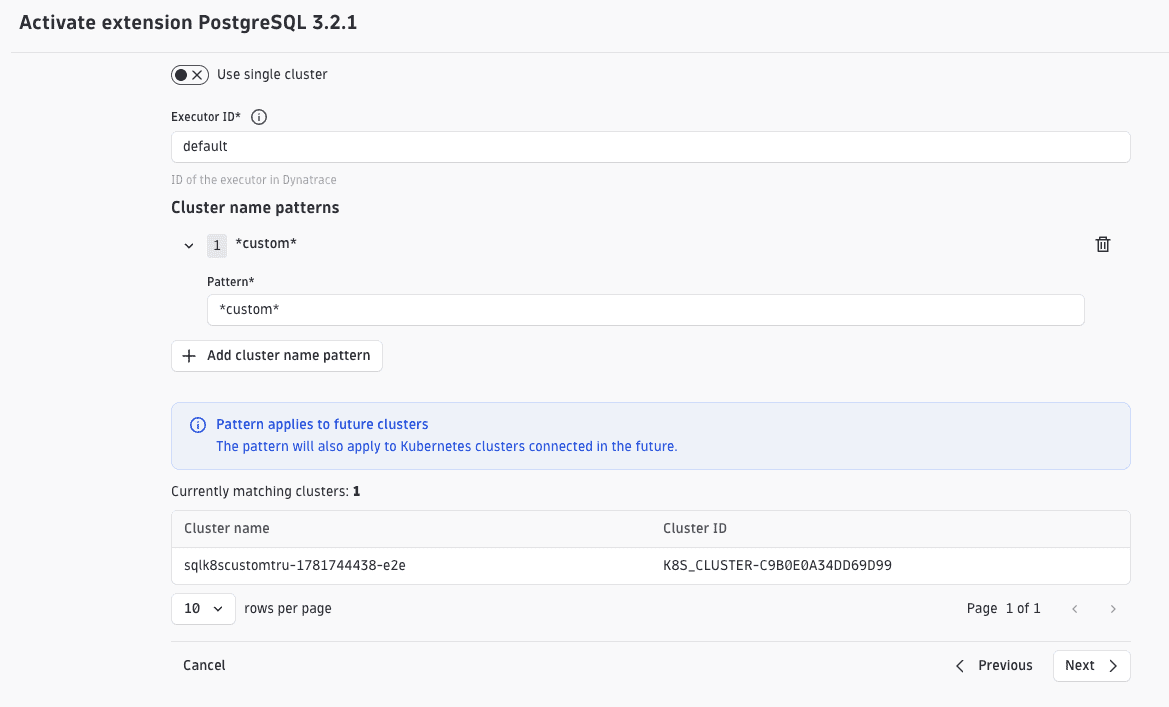 Cluster name pattern configuration showing pattern custom matching one cluster
 -
Select Next and provide database endpoints and authentication parameters. Once you save the configuration, Dynatrace attempts to run the extension on the targeted Kubernetes cluster. Allow a few minutes for the configuration to take effect, then verify the result on the Health tab.
Via API
Use the Extensions API to create a monitoring configuration programmatically.
The following example creates a PostgreSQL monitoring configuration targeting your SQL Extension Executor on Kubernetes:
[{"scope": "kubernetes","value": {..."activationContext": "CONTAINER","isSingleClusterConfiguration": true,"kubernetesClusterId": "<cluster-id>","executorId": "default","sqlPostgresContainer": {"endpoints": [ ... ]}}}]
The request body fields for Kubernetes monitoring configurations:
| Field | Description |
|---|---|
| Must be |
| Must be |
|
|
| ID of the Kubernetes cluster to monitor. Required when |
| List of name patterns. All Kubernetes clusters whose name matches any of the provided patterns will be targeted by this configuration. Required when |
| The executor group ID as defined in |
| Database connection endpoints and authentication parameters. The field name is vendor-specific: |
The full content of the activation JSON varies based on the SQL vendor, extension version, enabled features, and other conditions. To get the most up-to-date schema with all supported fields, use one of the following options:
-
Use the GET extension schema endpoint to retrieve the full schema for a specific extension version programmatically:
curl -X GET "https://{env-id}.live.dynatrace.com/platform/extensions/v2/extensions/{extension-name}/{extension-version}/schema" \-H "accept: application/json" \-H "Authorization: Bearer {platform-token}" -
If you already have a monitoring configuration in your environment, retrieve its payload using the GET monitoring configuration endpoint:
curl -X GET "https://{env-id}.live.dynatrace.com/platform/extensions/v2/extensions/{extension-name}/monitoring-configurations/{configuration-id}" \-H "accept: application/json" \-H "Authorization: Bearer {platform-token}"Alternatively, download an example from the last page of the selected configuration view in
Extensions.
Next steps
Kubernetes resource planning
Size the Extension Execution Controller and SQL Extension Executor pods on Kubernetes using recommended resource profiles and scaling strategies.
- Reference
Custom JDBC drivers
Provide custom JDBC driver JARs to SQL Extension Executor pods on Kubernetes using a custom container image or a mounted volume.
- How-to guide
Configure custom TLS certificates for SQL Extension Executor pods
Provide TLS certificates to SQL Extension Executor pods on Kubernetes by mounting individual certificate files or a pre-built PKCS12 truststore.
- How-to guide
Set up file-based endpoints and credentials
Configure SQL Extension Executor pods to use mounted files for credentials, keeping sensitive data out of Dynatrace and enabling zero-downtime updates.
- How-to guide
Monitored pod Kubernetes metadata enrichment
Learn how the Extension Execution Controller enriches extension signals with Kubernetes pod metadata based on the target endpoint's IP address.
- Explanation
Troubleshoot SQL extensions on Kubernetes
Diagnose and resolve common issues with SQL Extension Executor and Extension Execution Controller pods running on Kubernetes.
- Reference
Extensions